To get more Google reviews for your law firm, make leaving one take under a minute, ask each satisfied client personally at the moment the matter ends, and follow up once. Never offer anything in return. This post covers your review link, when and how to ask, what the bar rules and Google allow, and how to reply.
Reviews are a trust signal for the person comparing three firms on their phone. They also sit on the Google Business Profile that local search depends on, so keep the flow steady.
How do you get more Google reviews?
Run a small, repeatable routine instead of an occasional campaign. Satisfied clients rarely post unprompted, so the ask matters most.
Take a hypothetical three-lawyer injury firm in Phoenix that closes about eight matters a month. If it asks every client who was happy with the result and half say yes, it adds a few reviews a month without any ad spend. I’d rather see four reviews every month than forty in one week and then silence.
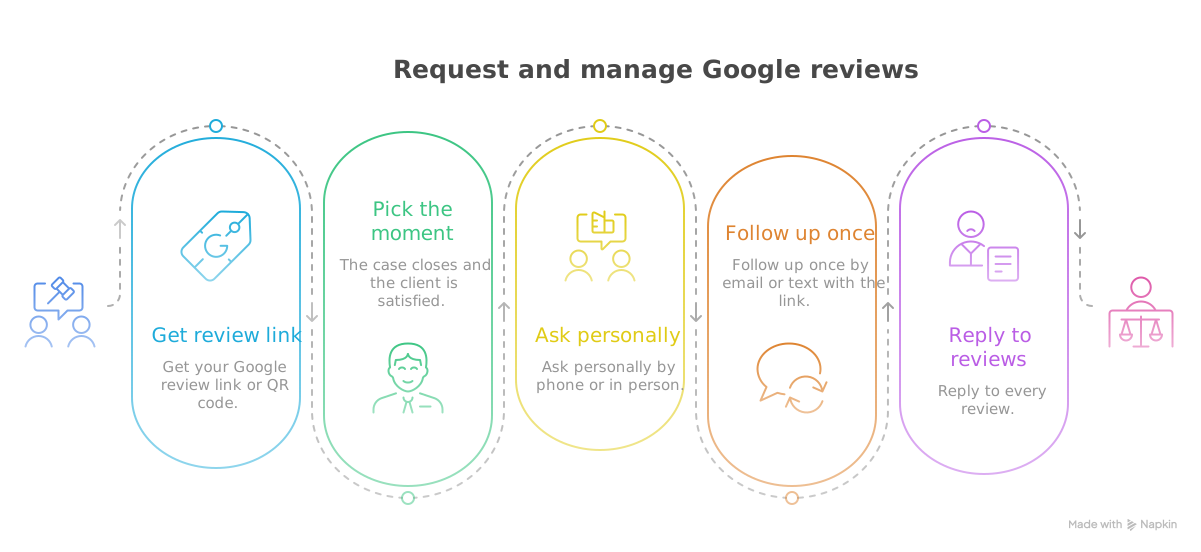
How do you get your Google review link?
Give clients one link or QR code that opens the review box directly. Google’s help pages say you can share a link or QR code with customers, and that customers must be signed in to a Google Account to post. You create the link from your Business Profile, and our Google Business Profile guide covers that setup.
Two practical points:
- Put the link where clients already look. Your email signature, closing letter, invoice, and a card at the front desk. One agency suggests a short redirect on your own site, such as
/google-reviews/, so the link is easy to say aloud (Juris Digital). - Remember the Google Account requirement. Some older clients don’t have one or won’t want to sign in. Offer to walk them through it, or accept that they may say no.
When and how should you ask?
Ask when the result is fresh and the client is pleased, and ask them yourself. The best moments are easy to spot.
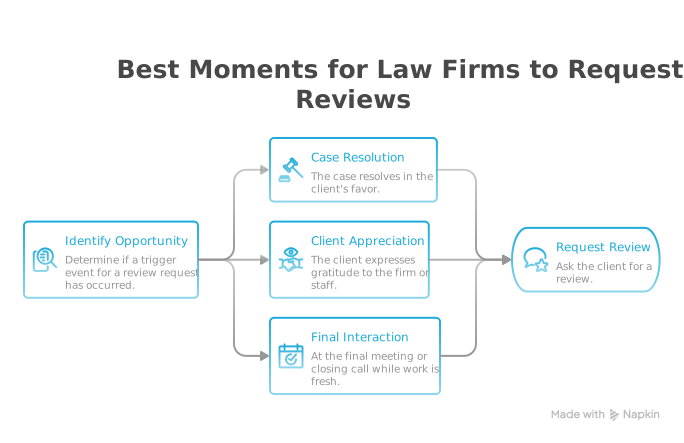
A personal request beats a mass email. The same Juris Digital guide recommends a phone call or a handwritten note to your happiest clients, with a follow-up email for recent clients who haven’t posted. Keep the wording plain:
“I’m glad this worked out for you. If you have a minute, an honest Google review helps other people find us. Here’s the link. No pressure either way.”
Then follow up once, a few days later, and stop. My rule of thumb: one nudge, not three.
This does not apply to every matter. Skip the ask when a client is in a painful or unresolved situation, when the matter ended badly, or when you are still representing them in something sensitive. A review request there costs more trust than it earns.
What makes a review worth having?
A specific review does more than a star rating. A reader trusts “She returned my calls the same day and explained the settlement in plain English” over “Great lawyer.” You can’t script what clients write, and you shouldn’t try: Google’s policy requires reviews to reflect a genuine experience. What you can do is make specific feedback more likely.
- Ask an open question first. “What was the part of working with us that mattered most to you?” gets a client thinking about details before they open the link.
- Name the place, not the words. Tell them where the review goes (your Google profile) and let them write it. Never suggest wording.
- Thank them in person, whatever they post. A client who feels heard is more likely to write something real.
Mixed reviews are fine. A four-star review with a thoughtful comment is often more believable than a vague five.
What do the bar rules and Google allow?
You can ask for honest reviews. You can’t pay for them, write them, or let them mislead. Rules vary by state, so check your state bar’s advertising rules before you roll out a process; this is general information, not legal advice.
The ABA’s Model Rule 7.1 says a lawyer may not make false or misleading communications about their services. Many states also have their own rules on testimonials and ratings. Some require disclaimers or limit how you can repost reviews on your own site, so look up your state’s version before you quote or feature reviews anywhere.
Google’s side is clearer. Its policy says reviews must reflect a genuine experience, and offering free or discounted goods or services in exchange for reviews is “strictly prohibited.” In my reading, that rules out gift cards and fee discounts too.
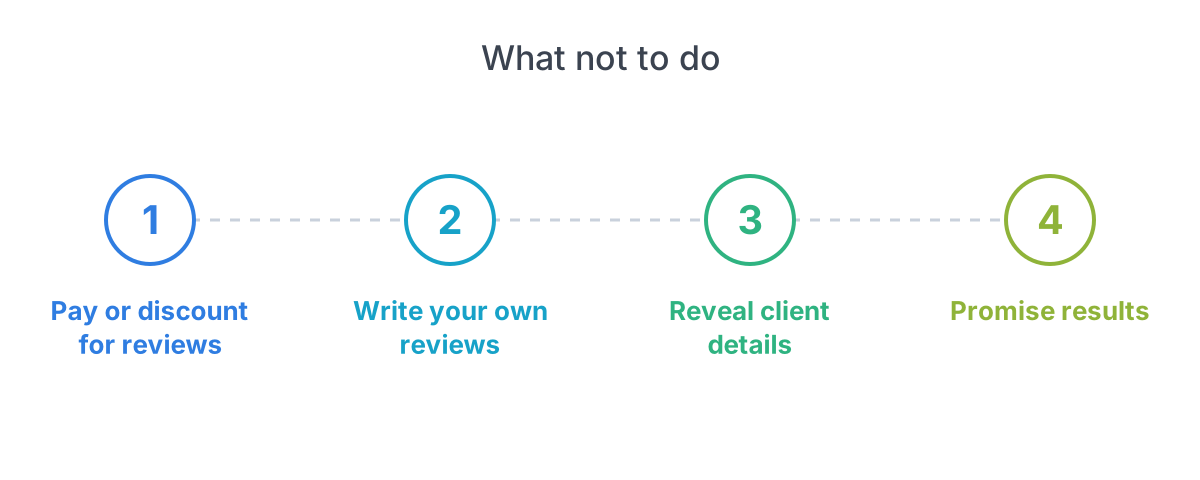
A short table keeps the line straight. Where your state rules say more than this, follow them:
| Practice | Safe? |
|---|---|
| Ask a happy client for an honest review | Yes |
| Share your link in a closing letter | Yes |
| Offer a discount for a review | No |
| Write or edit a client’s review | No |
Build the ask into how the matter runs
Put the request into steps you already have. Then nobody has to remember it.
- Closing checklist. Add one line: “Satisfied? Ask for a review, send link.” Whoever closes the file ticks it.
- Closing letter or final email. Include the link in the last message, below a short thank-you. It doesn’t need its own email.
- One person owns it. Pick a paralegal or office manager to send follow-ups and track who has been asked. Without an owner, the process fades in a month.
- Monthly look. Spend ten minutes checking new reviews, replies and the pace. If nothing arrived, ask whether the ask is happening, not whether clients are unhappy.
This takes minutes per matter and costs nothing but attention.
What if a client says no, or never gets around to it?
Treat a no as a complete answer. Thank them and move on; asking again turns a good ending into an awkward one. A client who says yes but doesn’t post is different. One gentle reminder a few days later is reasonable, and after that the matter is closed.
Some clients will want to help but worry about privacy, and that worry is legitimate. A review under their own name tells the world they hired a lawyer, and for family law or criminal defense clients that can be sensitive. Tell them plainly that they can leave out details, use a first name only, or skip it. Don’t press. Pushing a hesitant client puts them in an awkward spot.
Ask people one at a time, over time, and let them post from their own devices rather than a shared office computer.
How should you reply to reviews?
Reply to every review, and say almost nothing about the matter. You owe the reviewer a thank-you; you owe the client confidentiality. A reviewer may describe their case, but that generally doesn’t release you from your confidentiality duty. State rules on what you may say in response to public criticism differ, so check yours (this is not legal advice) before you defend yourself in public.
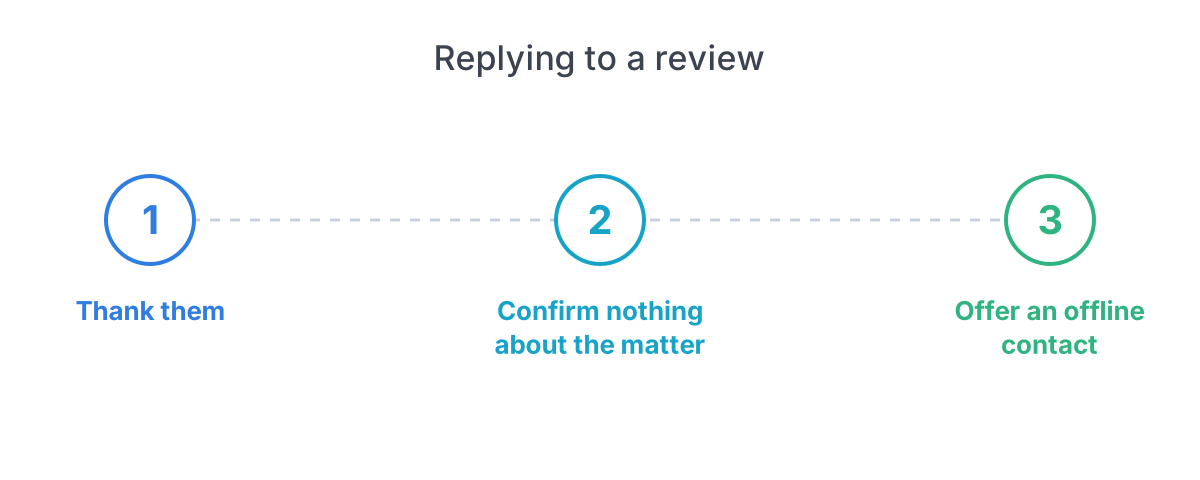
A safe reply to a positive review: “Thank you for the kind words. We’re glad we could help.” To a negative one: “We take feedback seriously. We can’t discuss any matter here, but please call our office so we can listen.” Don’t argue, don’t confirm they were a client, and don’t promise outcomes.
How many reviews do you need?
There is no magic number. Google doesn’t publish a threshold. Aim to have more recent, specific reviews than the firms you compete with in your area, and compare yourself to the firms that appear when you search your own practice and city.
Can lawyers ask for reviews?
Yes, if the request is honest and carries no reward. Check your state bar’s advertising rules, and never offer anything in return.
What should you track?
Track three things: new reviews per month, your average rating, and how many clients you asked. The third number tells you whether a quiet month came from a skipped ask or from a lack of takers. A simple spreadsheet is enough, with one row per closed matter and a column for asked, posted and replied. Check it monthly, not daily, since a handful of reviews moves the average around and says little about the process.
If the posted count stays flat while the asked count rises, look at the link: send it to yourself and open it on a phone to confirm it lands on the review box.
Where to start
- Get your review link and QR code from your verified Google Business Profile.
- Pick one moment in every matter when you ask, such as the closing call, and make it a habit.
- Reply to every review within a few days, with the confidentiality rules in mind.
If you’d like help setting up your profile or your review routine, our law firm SEO team does that for firms that would rather practise law.