Google Local Services Ads for lawyers are pay-per-lead ads that sit above the map results and the regular search ads, carrying a verification badge once Google has checked your firm. They can be worth testing for some practice areas, but you have to pass Google’s screening, track every lead, and check your state’s advertising rules first. This post covers how they work, how they compare with other placements, what to budget, and what to check before you spend.
What are Local Services Ads?
Local Services Ads (LSAs) are a separate Google ad product from Google Ads search campaigns: you show a profile with a badge, reviews and a call button, not a headline and a link. Google is merging its older badges into a single Google Verified badge. New advertisers earn it by completing Local Services screening and verification, and Google says the badge change doesn’t affect ad ranking.
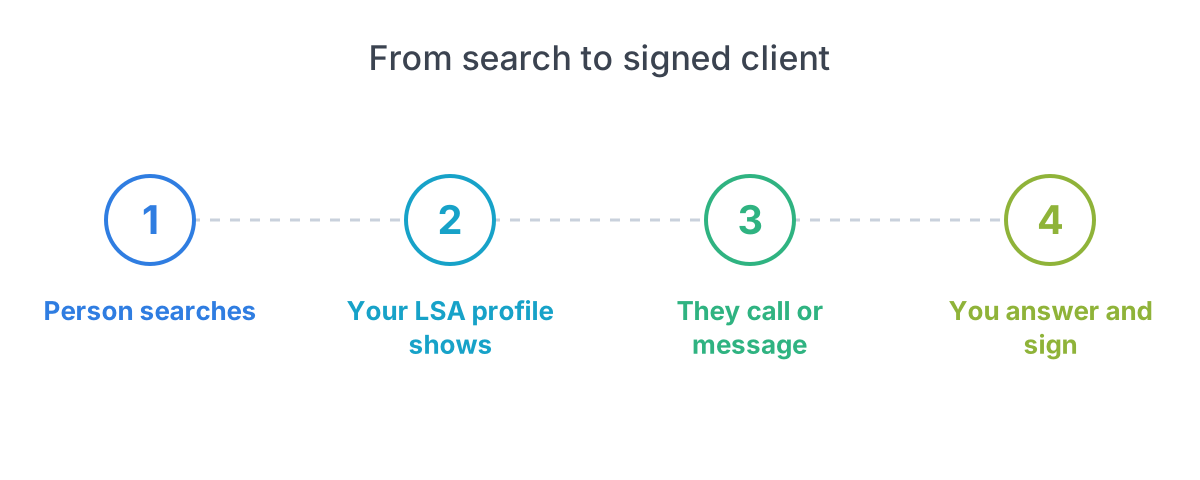
Take a fictional three-lawyer family law firm in Columbus. Searchers looking for a divorce lawyer see its LSA profile first: firm name, star rating, the badge and a button to call or message. The firm doesn’t write ad copy or pick keywords. It picks the types of cases it wants and a budget.
How do LSAs compare with Google Ads and the map pack?
The three placements work differently, and the one you pay for isn’t always the one that converts best. In short:
| Placement | You pay | You control |
|---|---|---|
| Local Services Ads | Per lead | Case types, budget, hours |
| Google Ads search | Per click | Keywords, ad copy |
| Map pack (organic) | Nothing per click | Profile, reviews, site |
The map pack depends on your Business Profile, reviews and website, which is the slow, free route covered in how to rank in Google Maps. LSAs buy a place above it. They don’t replace it, since the same reviews and profile accuracy feed both. If you haven’t done the basics in local SEO, fix those first.
How does Google screening work?
Before you can run LSAs, Google verifies the business; expect to prove the firm is real and licensed. Google’s help center says new advertisers must complete screening and verification to earn the badge, and it links to separate pages listing the requirements for each business type. The requirement pages weren’t readable in full when this was written, so check the exact list for lawyers in your Local Services Ads account before you start.
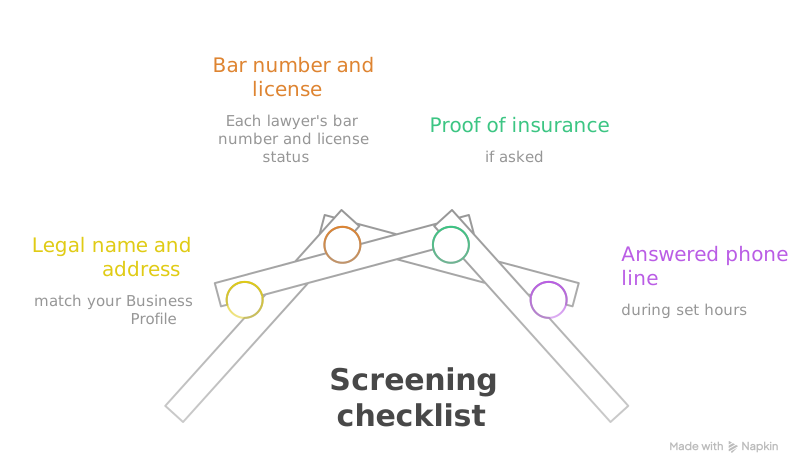
Plan on having these ready, and confirm each against Google’s current list:
- Your firm’s legal name and address matching your Business Profile.
- Each lawyer’s bar number and license status.
- Proof of the firm’s insurance, if Google asks for it.
- A phone line that someone answers during the hours you set.
Verification can take days or weeks, so don’t schedule a launch around it. Google’s older consumer-reimbursement program tied to the previous badge is being discontinued, per its help page, so don’t rely on any pitch that still mentions it.
How do you get the Google Verified badge?
You apply inside a Local Services Ads account, then finish each verification step Google asks for. Names have shifted: the older “Google Screened” label is being replaced by the single Google Verified badge, so a guide that still says “Screened” may be out of date. Google’s own help page is the one to trust for current wording.
In practice the work is mostly paperwork and follow-through:
- Start the application with the person who has authority to speak for the firm.
- Use the same firm name and address everywhere, including your Business Profile and website.
- Answer any verification requests quickly, since a stalled request holds up your launch.
- Keep your bar records current, since Google checks licenses.
What should you check before you read any agency guide?
Check the date and who is selling. Many pages on this topic are written by agencies that manage LSAs for a fee, and several still describe the old badge names and reimbursement terms. That doesn’t make them wrong, but a cost range with no named source is a sales number. When you see one, ask what it measured, in which cities, and for which practice area.
Why does it matter? Because an outdated claim about how the ads work can lead you to budget around terms that no longer exist, and a firm that repeats a wrong claim on its own site owns that statement, and Rule 7.1 is the place to check how your state treats it (rules vary; this isn’t legal advice).
A cheap habit helps: open Google’s help page for any claim about badges, screening or disputes, and trust it over a blog post. Then check your state bar’s advertising rule for anything the ad says about you.
What do Local Services Ads cost?
You set a budget and pay per lead, but Google doesn’t publish typical legal lead prices, so your own tracking is the only number that counts. Agency blogs quote wide ranges that differ by practice area and city, and they are marketing material, so I won’t repeat their figures here.
An example follows. The numbers below are invented to show the arithmetic, not a benchmark.
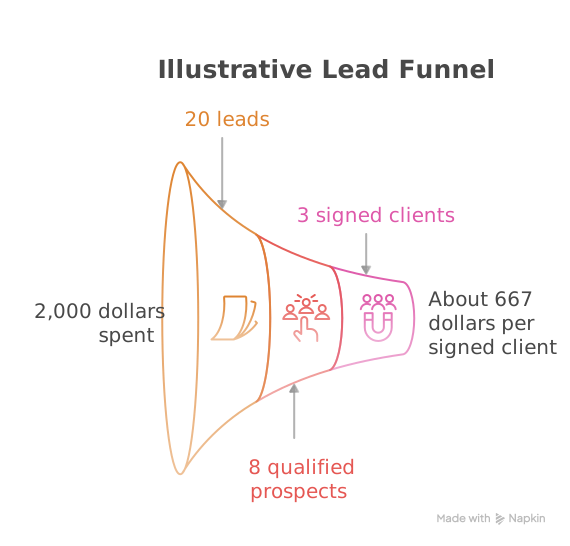
Say the Columbus firm spends $2,000 in a month and gets 20 leads. That is $100 a lead. Suppose 8 of those are real prospects in its practice area, 3 become signed clients. The cost per signed client is about $667. If an average family law matter brings in far more than that, the channel works. If half the leads are wrong-area calls, the math changes quickly.
Track three numbers every month: leads, qualified leads and signed clients. A lead that you didn’t answer is money spent for nothing, so decide who picks up the phone before you turn the ads on.
What do bar rules say about LSAs?
The ads are advertising, so your state’s lawyer advertising rules apply to your profile, your reviews and your lead handling. Rules vary by state; this is general information, not legal advice, and you should check your own state bar.
ABA Model Rule 7.1 bars false or misleading communications about a lawyer or their services. The comment to Rule 7.1 adds that unsubstantiated comparisons can mislead. North Carolina’s version of Rule 7.1 is a useful state example: it says a true statement can still mislead if it omits a fact needed to avoid a misleading overall impression, and it names statements that create unjustified expectations about results.
For your LSA profile, that means:
- Don’t claim “best” or “top-rated” without a basis you can show.
- Describe case types accurately; don’t imply a specialty you aren’t certified in. Model Rule 7.2(c) covers certified-specialist claims, so read it and your state’s version.
- Don’t promise results in replies to reviews or in the first call.
- Treat the leads’ details as confidential from the first contact.
Are LSAs worth it for your practice area?
They suit practices where a person searches in a hurry and phones the first firm that looks legitimate, and they suit them less where cases are slow to choose or rare. I can’t tell you your return, and I’d distrust anyone who claims to. Practices with urgent, high-value matters tend to suit the format better than ones with long decision cycles, but that is a judgment call, not a measured rule. What I’d do is run a small test, and write down before you start what result would make you stop and what would make you continue.
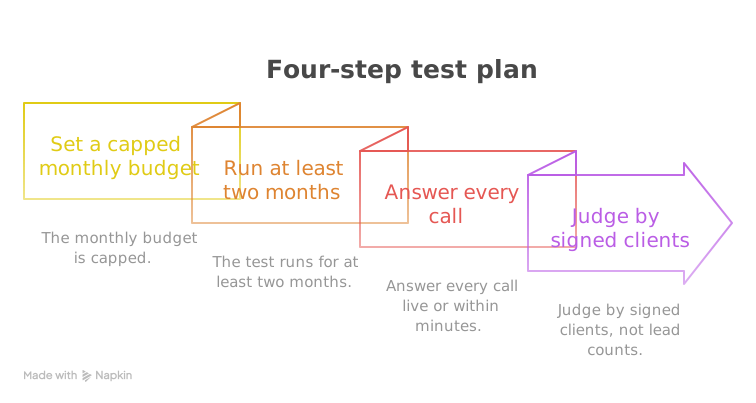
Cap the spend, give it time, answer fast, and count signed clients.
LSAs are a poor fit if no one can answer the phone, if your reviews are thin, or if your state’s rules on paid referrals or lead sources are unclear to you. If you want the free route to the same spot, a strong profile and website can earn that spot over time, and a law firm SEO plan can help.
Where to start
- Read Google’s current screening requirements for lawyers and your state’s advertising rule before you apply.
- Make sure your Business Profile, reviews and phone answering are in good shape.
- Run a capped two-month test and count signed clients, not leads.