To rank in Google Maps, a law firm needs an accurate, verified Google Business Profile, a steady flow of real reviews, and a website that backs up what the profile says. Google decides rankings on relevance, distance and prominence. This post shows what each means, what you can change in 30 days, and what you cannot.
Nobody can buy or promise a map position. Google says there is no way to pay for a better local ranking. What you can do is remove the mistakes that keep a good firm out of the top results. This builds on our overview of local SEO for law firms.
How does Google decide map rankings?
Google ranks local results on relevance, distance and prominence. Its help page says local results are based mainly on those three factors.
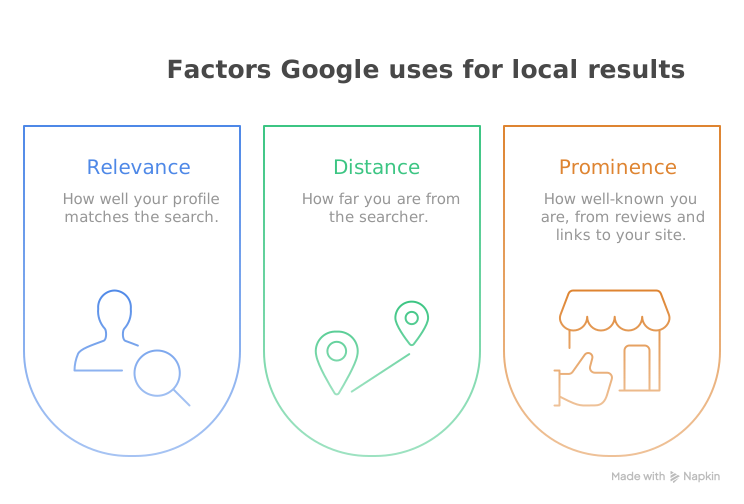
- Relevance is how well your profile matches the search. Complete, detailed information helps.
- Distance is how far you are from the person searching, or from the location they typed in.
- Prominence is how well known you are. Google says it draws on information from across the web, such as links and reviews.
Google does not say how much each factor weighs. Anyone who gives you exact percentages is guessing, or quoting a survey of SEO opinion rather than a measurement.
Take a hypothetical three-lawyer injury firm in Phoenix. It cannot move its office closer to searchers, so distance is fixed. Relevance and prominence are where it can work, and that is what the rest of this post covers.
What should you fix on your profile first?
Start with the basics, because errors there cost you relevance and can get the profile suspended. Google’s guidelines for representing your business are specific, and they are the cheapest wins.
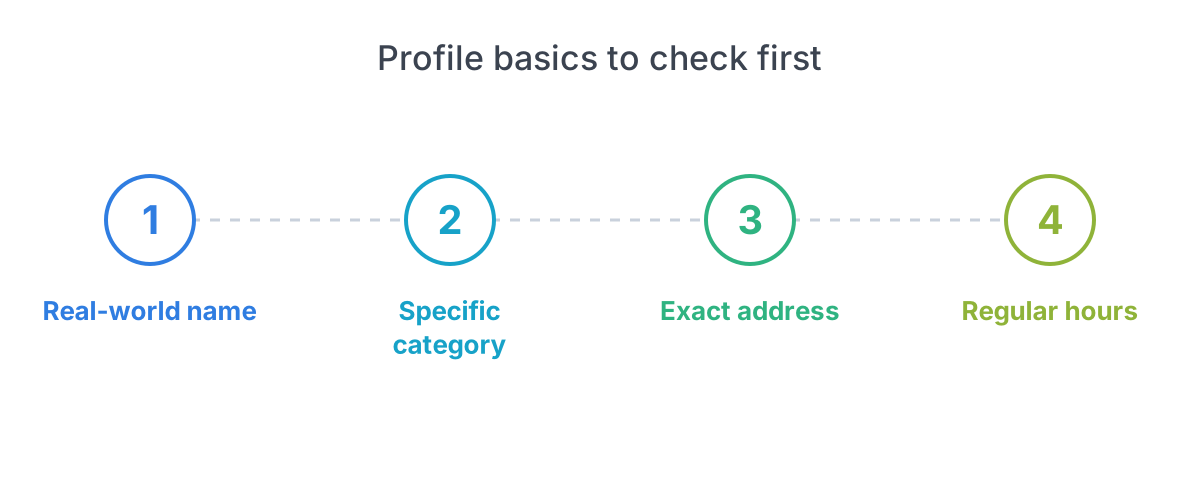
- Name. Use the name on your signage, stationery and website. Google says not to add taglines, phone numbers, URLs or location details. A name like “Smith Law - Best Phoenix Car Accident Lawyer” breaks that rule.
- Category. Google tells businesses to pick the fewest categories that describe the core business, as specific as possible. Our guide to Google Business Profile categories for lawyers walks through the choice.
- Address. Use a real address customers can visit. Google says P.O. boxes and virtual offices are not eligible. A firm that meets clients only at their homes should hide the address and set a service area instead.
- Hours. List your regular customer-facing hours if you keep them. Google says some businesses, including those that operate only by appointment, should not list hours, so a firm that sees clients only by appointment can leave them off.
Keep one profile per location. Google warns that duplicate profiles can cause display problems on Maps and Search. If you have not set up or claimed yours, our Google Business Profile guide for lawyers covers verification.
How do reviews affect Google Maps ranking?
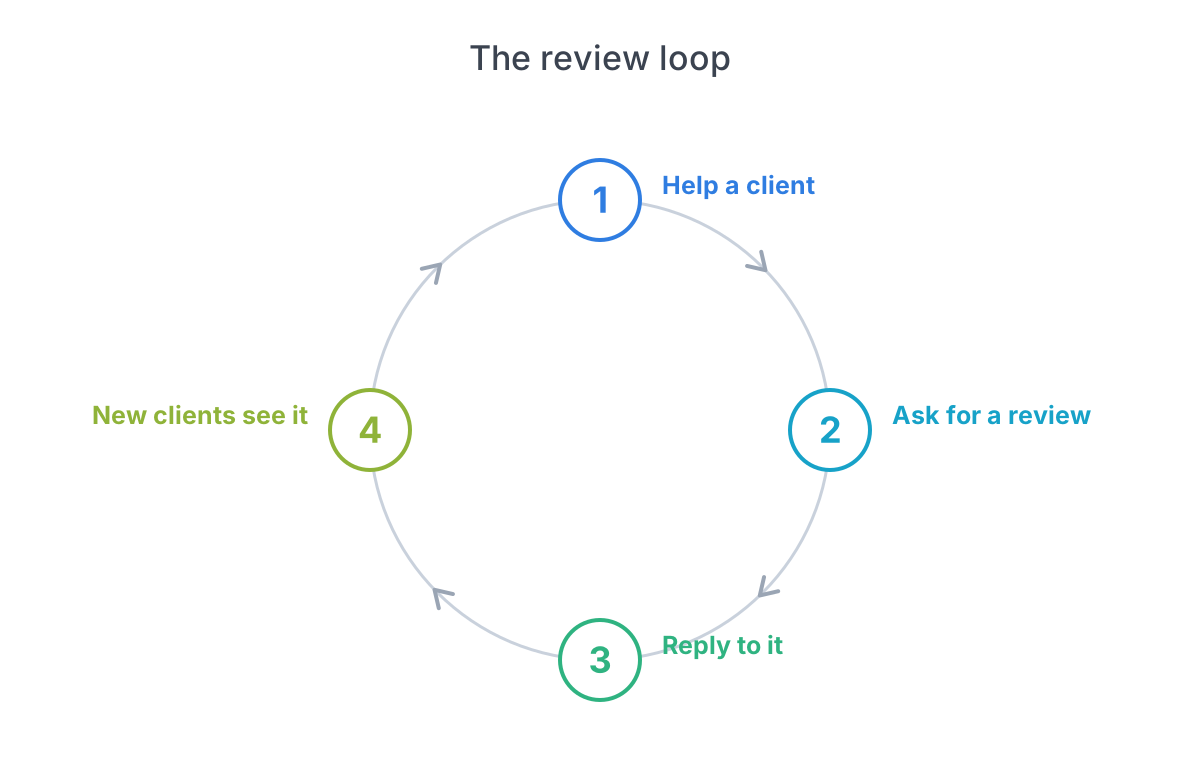
Reviews are part of prominence, and Google says more reviews and positive ratings can help your local ranking. That is the wording on its local ranking page. It also notes that replying to reviews shows clients you value their feedback.
Some SEOs think reviews matter more for the map pack than for ordinary results. Ahrefs’ local SEO guide says so, citing a BrightLocal survey of SEOs. That is professional opinion, not a measured ranking study, so treat it as a reason to take reviews seriously, not as proof of a formula.
For a lawyer, two cautions apply:
- Never offer money or favors for a review, and never write your own. Google’s policies prohibit fake and incentivized reviews, and your state bar may have its own view of client testimonials.
- Never reveal client details in a reply. A reply to a review cannot confirm that the reviewer was a client. Our guide to Google reviews for law firms covers safe wording.
Timing matters too. The best moment to ask is right after a good outcome, when the client is relieved and the case is fresh. Waiting a year turns a warm request into an awkward one, and a client who has moved on is less likely to reply. Keep the request short: thank them, say a review helps other people find help, and send the link.
I’d ask satisfied clients at the end of the matter, by email, with a direct link to your review form. Check your state bar’s rules on soliciting reviews first, and never mention case details in the request.
Do citations and your website help?
Your website and listings matter, but mostly as support for a profile that is already right. Google’s ranking page does not mention citations (listings of your name, address and phone number on other sites). It does say prominence includes links from other websites.
Ahrefs reports that SEOs now rank citations lower than they did in 2013, though consistent details still help people find you. In practice, that means two jobs:
- Make sure your name, address and phone number match your profile on your site, your main directory listings and your bar profile.
- Give each core practice and city a dedicated page that says what you handle and where. This is relevance Google can read.
If your site is built by a developer, ask about local business structured data, a block of code that tells Google your name, address and hours in a form it reads easily. Google says it needs only a name and address, and adds that markup does not ensure any special display in results, so see it as housekeeping rather than a ranking lever.
Do not pay for hundreds of low-quality directory listings. A listing earns its place when real clients look there, like a bar association directory or a respected legal directory. Every extra listing is one more place to correct when you move or change your phone number. If you want broader help with this side, see our law firm SEO service page.
What can’t you control?
Proximity is the biggest thing you cannot change, and it varies by searcher. Google says distance is based on how far each business is from the person searching, or from the location they enter. A firm two blocks from the searcher can beat a stronger firm across town.
| Factor | Can you change it? |
|---|---|
| Profile accuracy | Yes |
| Review volume and replies | Yes, over time |
| Searcher’s location | No |
| Competitor strength | No |
Two honest limits follow. First, a firm tends to show up best near its own office, and opening a second profile at a fake address is against Google’s rules. Second, results change by search and by searcher, so one screenshot of “ranking first” tells you little. Search from a few places around your service area before you judge anything. A free way to do this is to ask a friend or colleague in another neighborhood to search the same phrase and read you what shows up.
What is the 30-day checklist?
Spend week one on the profile, week two on reviews, week three on the website, and week four on checking results.
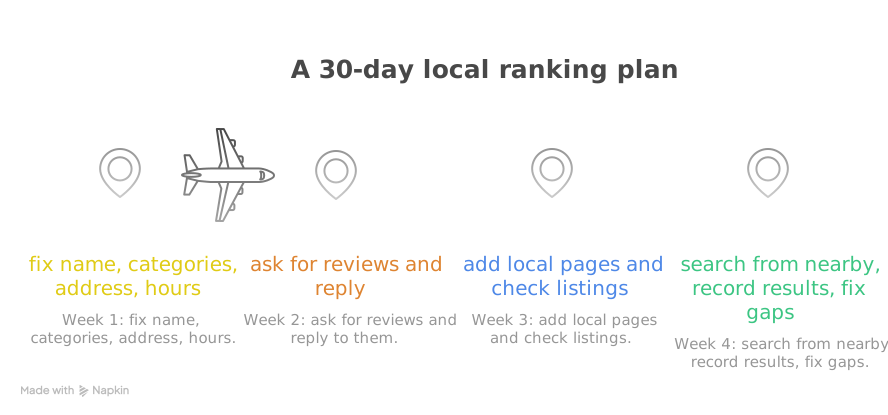
- Week 1. Verify the profile. Check the name, categories, address and hours against Google’s guidelines. Remove duplicates.
- Week 2. Reply to every existing review. Start asking each new client for one, with a direct link.
- Week 3. Match your name, address and phone number on your site and main listings. Add or tighten a page for each core practice and city.
- Week 4. Search your main practice terms from a few nearby spots. Note where you appear, and write down what to fix next.
Keep a simple log of the changes you make and the date of each. When you review results later, you will know what you tried and when.
Expect slow movement. Reviews take months to build, and nobody can promise a position by day 30.
Why does my law firm not show on Google Maps?
Common causes to check are an unverified or suspended profile, a wrong category, or a business name that breaks the guidelines. Check those three in that order. A virtual office address, or an address that Google cannot match to a real storefront, is another common reason.
If the profile is fine, you may simply be outranked by firms that are closer to the searcher or better known. That is a long-term job, not a setting. Check Google’s own help page on how local results are ranked before paying anyone who claims a shortcut, because it states plainly that rankings cannot be bought.
Where to start
- Audit your profile against Google’s business representation guidelines today.
- Start a review habit: one request to each satisfied client, every time.
- Match your name, address and phone number across your website and listings.
Rules on advertising and testimonials vary by state, so check your state bar before you use client reviews in your marketing.