Most small firms need only a handful of legal directories: Google Business Profile, a few general profiles such as Yelp, Bing and Apple, and two or three legal directories where your clients actually look. A citation is any listing of your firm’s name, address and phone number on another site, and consistency matters more than volume. This guide sorts directories into tiers, names the ones to skip, and gives you a short audit.
What is a citation, and why does it matter?
A citation is a mention of your firm’s name, address and phone number (NAP) on a third-party site, with a website link as an optional extra. BrightLocal separates structured citations (directory listings) from unstructured ones (a mention in an article or news story).
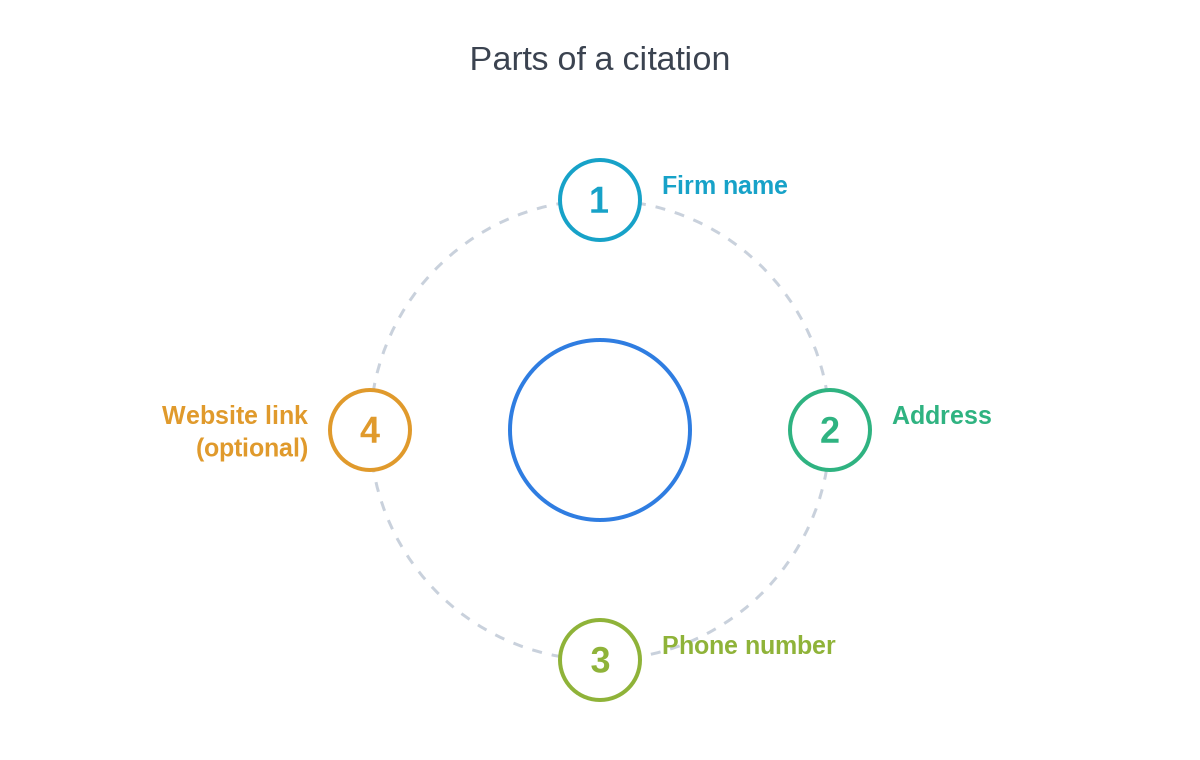
Citations are not the same as links. A link has to be clickable and can vary from page to page. A citation has to match everywhere.
Nobody outside Google knows how much weight citations carry, and BrightLocal’s page gives no figure. What is documented is the downside of messy data. Google says businesses with complete and accurate info are more likely to show up in local search results. In BrightLocal’s 2021 survey (the latest I found) of 1,141 US consumers, 63% said incorrect information on a listing would stop them choosing that business.
Take a fictional three-lawyer family law firm in Columbus, Ohio, which moved offices two years ago. If its old address still sits on three directories, a prospective client can call the wrong number or drive to the wrong building. That cost is real even if you ignore rankings.
Which directories should come first?
Start with the profiles that people and AI tools already use to find businesses. This is editorial judgment, not a ranking, and your market may differ.
BrightLocal’s August 2026 study of local AI answers checked Google AI Overviews, AI Mode and ChatGPT. In its lawyer sample of 13,354 citations, Google accounted for 42%, Yelp for about 7.9%, Justia for 3.2%, Avvo for 2.5%, Lawyers.com for 1.8%, Facebook for 1.7% and FindLaw for 0.9%. Treat these as a snapshot of one study, not a promise of what any listing will do for you.
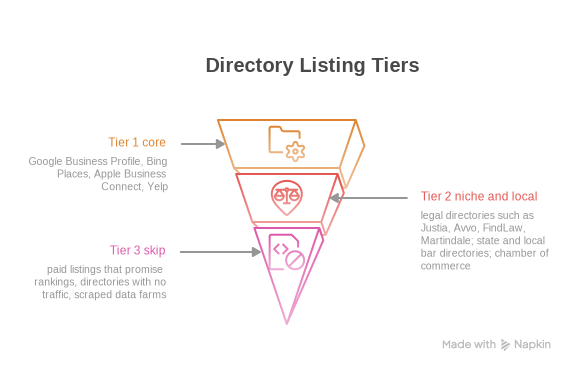
Tier 1 is the general-purpose set:
- Google Business Profile. Free, and by far the most-cited source in that study. See our Google Business Profile guide for lawyers.
- Yelp. Second-largest in the lawyer sample, and the same study found Yelp in about 80% of ChatGPT’s answers.
- Bing Places and Apple Business Connect. Free, quick to claim, and they feed other maps and assistants.
Which legal-specific directories are worth it?
Add legal directories one at a time, and only where the profile is free or the cost is clear. Justia, Avvo, Lawyers.com and FindLaw all appear in the legal results above, and Martindale is well known to clients. I can’t quote their current pricing or traffic, so check each directory’s own page before you pay anything.
My editorial tiers:
| Tier | Examples | Action |
|---|---|---|
| Tier 1: core | Google, Yelp, Bing, Apple | Claim and maintain |
| Tier 2: niche, local | Justia, Avvo, state bar, chamber | Claim free profile |
| Tier 3: skip | Pay-to-rank, no-name sites | Ignore |
Tier 2 also includes your state or local bar’s lawyer directory and your local chamber of commerce. These are often free; check each one’s terms.
If you handle one practice area, add a directory for it, such as a bar section’s referral list.
Each free profile still needs a login, a verification step (often a postcard or phone call) and a periodic look to make sure nobody has edited your hours or suggested a different phone number. That upkeep is the real cost of a long list, which is why I’d rather see a firm keep six listings accurate than own thirty it has forgotten.
Which directories should you skip?
Skip any directory that charges for placement without showing who uses it. Three warning signs:
- It promises “top rankings” or “page one” for a fee.
- It scrapes your details and asks you to pay to “claim” them.
- It can’t tell you how clients reach you from the listing.
Also watch the ethics side. Under ABA Model Rule 7.2(b), a lawyer may not give anything of value for recommending the lawyer’s services, with limited exceptions such as paying reasonable advertising costs. Listing fees are generally advertising, but “pay for a recommendation” or “best lawyer” badges deserve a second look. Rule 7.2(c) also limits “certified specialist” claims to an approved certifier. Rules vary by state, so check your state bar before you pay for any badge or ranking. This is general information, not legal advice.
Rule 7.1 applies to every profile too: don’t claim anything false or misleading about yourself or your services. Directory bios count as communications about your services. Once a profile is claimed, you are responsible for what it says.
How do you run a NAP consistency audit?
Pick one master version of your name, address and phone number, then make every listing match it. Exact formatting matters less than avoiding conflicts, but pick one style and stay with it (“Suite 200”, not “Ste. 200” in one place and “#200” in another).
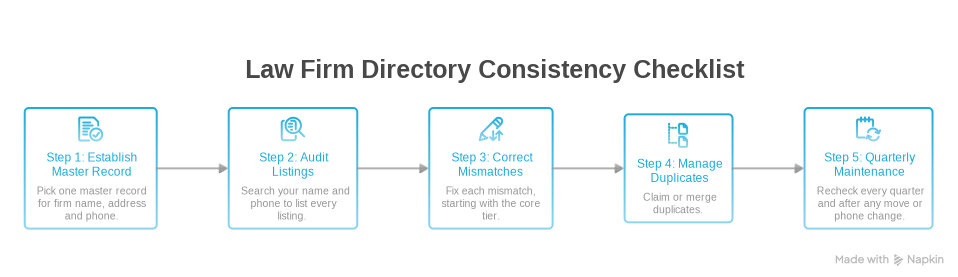
- Write the master record. Firm name as it appears on your letterhead and website, street address, main phone, website URL.
- Find what exists. Search your firm name, each attorney’s name and your phone number, including old numbers.
- Fix the Tier 1 listings first, then legal directories, then local ones.
- Claim or merge duplicates. BrightLocal notes that conflicting data can make Google treat one business as two.
- Recheck every quarter and after any move, rebrand or phone change.
Two caveats. A firm name that changes with a partner’s departure needs its own review under your state’s firm-name rules. And a call-tracking number on a directory can conflict with your main number, so decide whether you will use one and keep it consistent.
Do legal directories help SEO?
They help mostly by confirming your details, and sometimes by sending referrals, not by moving you up a ranking on their own. Google states that local results are mainly based on relevance, distance and prominence, and that you can’t pay for a better local ranking. A directory profile won’t change that.
Is Avvo still worth it?
It can be, for a free profile that clients see. Avvo showed up in the lawyer sample above, but I can’t verify its current features or pricing, so read its own page and decide whether any paid tier makes sense for your market.
How many citations does a law firm need?
There is no documented number. I’d aim for an accurate Tier 1 set plus a few legal and local profiles, rather than a long list you can’t keep current.
In what order should you claim listings?
Work from the biggest, most general profiles down to the narrowest. The order below keeps the effort where the most people look first, and it means a mistake in your master record gets fixed before it spreads to ten more sites.
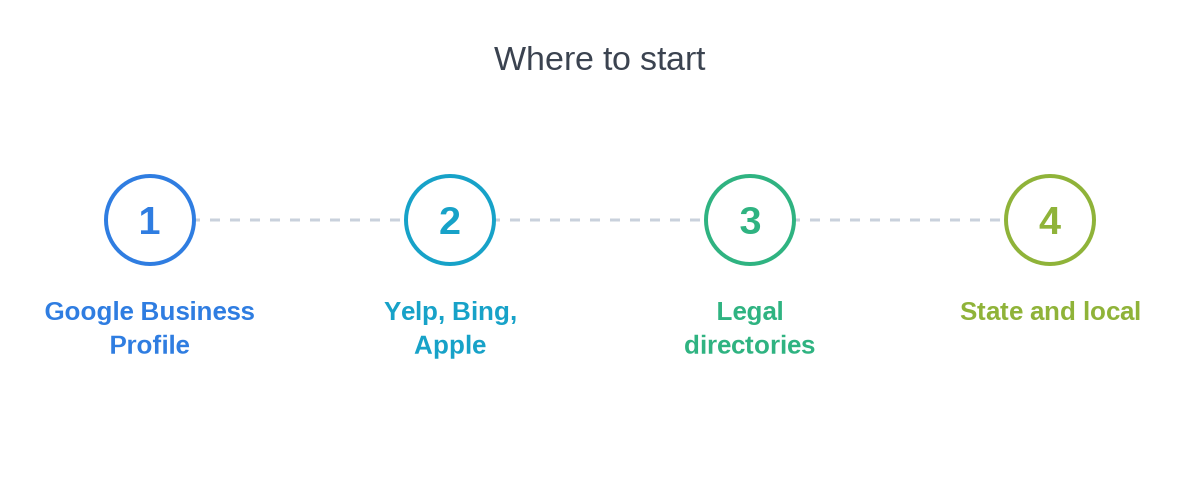
For the Columbus firm, that means Tier 1 first, then two legal directories, then a quarterly recheck. Put the quarterly recheck in a calendar, assign it to one person in the office, and keep the master record in a shared document so a new receptionist or associate doesn’t invent a fourth version of your firm name.
Where to start
- Claim and complete your Google Business Profile, then Yelp, Bing and Apple.
- Run the NAP audit and fix every mismatch.
- Add two or three legal or local directories where clients look, and skip anything that sells rankings.
If you want the bigger picture, read how local SEO fits into law firm marketing. If you’d rather hand the listing work to someone, Lawzen’s law firm SEO service covers listing cleanup.